Wednesday, 7 October 2020

Facial exercises for a perfect smile


Facial exercises for a perfect smile

Smile exercises

Simple and straightforward, this exercise in smiling practice improves the facial muscles that control your smile, which will give you greater control over your happy expressions. Start by sitting or standing in front of a mirror, whichever is more comfortable, with your face and lips in a relaxed state.

  1. Stretch both the corners of your mouth laterally (to the sides) while keeping your lips together; hold for 10 seconds.
  2. Expand the lateral stretch and part your lips to expose the edge of your teeth; hold  it for 10 seconds.
  3. Stretch more towards laterally and expose about half of your teeth; hold it for 10 seconds.
  4. Smile wide and hard as you can, with all teeth to be shown; hold it  for 10 seconds.
  5. Repeat steps 3, 2, and 1 to reverse the smile gradually.

For additional exercise, you can go through all of the above steps, using your index fingers to stretch the corners of your mouth and create the different smiles.

The silly rabbit

In this exercise, you’ll tone your cheek muscles while increasing the flexibility and control of your smile. You may or may not look in a mirror while performing this exercise. Here are the steps for this face exercise:

  1. Smile as wide as you can, without opening your lips. Try for an ear-to-ear grin.
  2. Wiggle your nose like a rabbit until you feel your cheek muscles engage with the smile.
  3. Hold the pose for 5 seconds.
  4. Repeat steps 1,2, 3 for 10 times 

The facelift exercise

One particular facial muscle, the quadratus labiisuperioris, is essential for maintaining a youthful appearance. Developing this muscle helps to prevent facial sagging and ensure resiliency. Below are two exercises to help utilize this muscle to your advantage.

  1. With your mouth slightly open and the upper lip relaxed, flare out your nostrils and wrinkle the nose with an exaggerated motion.
  2. Pull up the upper lip and hold for a count of 10. Slowly release.
  3. Repeat steps 1 and 2, for 10 times.

The smile line eraser

With this exercise, you can work at reducing the appearance of fine lines around your mouth, makes you look younger and gives you more natural smile. In yoga, this exercise is referred to as the fish pose. Here’s how to do it:

  1. Pucker up: purse your lips as dramatically as possible by sucking in your cheeks and rolling your lips out.
  2. Attempt to smile while you’re puckering.
  3. Hold this pose until there’s a mild aching sensation in the muscles around your mouth, then release. This exercise should be done only once a day, in order to avoid straining the muscles of your face.


The Smile Wide technique

This exercise is relatively a huge part of our daily lives. But the trick here is, that you smile wide, for about 15 seconds, hold that smile and repeat this over 10 times. Not only will this cause a stretch and strain in your cheek muscles, but will also increasingly make you feel happier than before. And slowly, it would become a habit, smiling off at things that make you feel in a certain way.

It needs more  time and devotion. Without it, these smiling exercises will make no difference to your facial structure. Incorporate these facelift exercises to your daily health routine, devoting at least 30 minutes just to it. In a few months, you will start showcasing the results.

 The biggest enemy of your skin loosening up or stress showing on your face is just unhappiness. The facelift exercises and happiness, work hand in hand, simultaneously.

Sunday, 4 October 2020

TMJ Disorders

 TMJ Disorders


According to the American Academy Of Orofacial Pain, TMJ Disorder is defined as a collective term that encompasses a number of clinical problems that involves the masticatory muscles, or the joint itself or both.

CLASSIFICATION

Articular disorders (intra-articular)

Congenital or developmental disorders

·            Condylar hyperplasia

·            First and second brachial arch disorders

·            Idiopathic condylar resorption

Degenerative joint disorders

·          Inflammatory: capsulitis, synovitis, polyarthritides (rheumatoid arthritis, psoriatic arthritis, ankylosing spondylitis, Reiter syndrome, gout)

·          Non-inflammatory: osteoarthritis

Disk derangement disorders

·         Displacement with reduction

·         Displacement without reduction (closed lock)

·          Perforation

Infection

Neoplasia

Temporomandibular hypermobility

·         Dislocation

·         Joint laxity

·         Subluxation

Temporomandibular hypomobility

·         Ankylosis: true ankylosis (bony or fibrous) or pseudoankylosis

·         Postradiation fibrosis

·         Trismus

Trauma

·         Contusion

·         Fracture

·         Intracapsular hemorrhage

Masticatory muscle disorders (extra-articular)

·         Local myalgia

·         Myofascial pain disorder

·         Myofibrotic contracture

·         Myositis

·         Myospasm

·         Neoplasia

DIAGNOSIS

·         Always take a good history from the patient

·         location

·         onset

·         frequency and duration

·         intensity ( 0-10)

·         quality

·         modifying factors

·         other associated symptoms

Criteria for Intracapsular Disorders

Disc displacement with reduction

·         patient reports clicking/popping/snapping while opening or closing /excursions

·         - verify in physical examination

·         may or may not be painful.

·         pain if present occurs with jaw function-verify in physical examination

Disc displacement without reduction with limited mouth opening

·         No current report of joint sounds

·         mouth opening <= 40mm

·         typically painful

·         pain occurs with jaw function -verify in physical examination

Criteria for Extra Capsular Disorders

·         Pain from muscle origin-complains of pain in front of the ear, jaw , temple

·         Pain changes during jaw function.

·         examination shows

·         verification of pain site in palpation

·         radiating pain

CENTRAL MEDIATED MYALGIA

·         REPORTS widespread pain

·         Examination will shows

·         verification of familiar pain sites

·         involves most of the masticatory and cervical muscles

·         patient may or may not withdraw from your hands

·         when you palpate pain may not come

Treatment

·         Education

·         conservative treatment

·         sleep hygiene instruction

·         appliances

·         trigger point injections

·         medicines

·         INTERDISCIPLINARY CARE 

                                       WITH BEHAVIOURAL THERAPY, 

PHYSICAL THERAPY, SURGERY.

by,

Dr.Renju T George,

India.

Wednesday, 23 September 2020

Dengue immunity against COVID-19


 A new study in Brazil has found a link between the spread of the coronavirus and past outbreaks of dengue fever that suggests exposure to the mosquito-transmitted illness may provide some level of immunity against COVID-19.

Places with lower coronavirus infection rates and slower case growth were locations that had suffered intense dengue outbreaks this year or last.

This indicates that there is an immunological interaction between two viruses that nobody could have expected.

It highlights a significant correlation between lower incidence, mortality and growth rate of COVID-19 in populations in Brazil where the levels of antibodies to dengue were higher.

by,

Dr. Renju T George,

India.


Monday, 21 September 2020

Iodine solution and Covid-19

 Iodine solution and Covid-19


The University of Connecticut School of Medicine suggested that iodine solution may help in preventing the spread of novel coronavirus, 

This study is published in JAMA Otolaryngology-Head and Neck Surgery.

The reaction of the virus in three different iodine concentrations -- 0.5 per cent, 1.25 per cent, and 2.5 per cent noted.

Researchers found that all three concentrations, including the weakest 0.5, can completely inactivate the virus.

The iodine solutions inactivated the virus within 15 seconds.

The Times Now reports also found that the iodine solution is remedial against other similar infections, including SARS and MERS.

ADVANTAGES

  • This could help reduce the risk of viral spread through droplets and aerosols.
  • This will help prevent the spread of the virus in waiting rooms and common areas of the hospitals/clinics.
  • This method could reduce the risk of coronavirus positive patients developing critical symptoms of the virus.
  •  It can help decrease the viral load that travels to the lungs.

Antiviral Properties of Iodine

Iodine has always been used as an antibiotic, antiviral, and anti-fungal agent, but sadly, there is no financial interest in modern medicine in iodine.

According to a study, iodine offers a severe and effective replacement for much of the antibiotics, and it could be used safely on children.

 Iodine is mostly used as treatment and prevention of infection in wounds, ulcers, burns, cuts, and other minor injuries.

Moreover, iodine can kill Candida and other fungi and microbes.

It is a powerful disinfectant.

Also, it is prescribed together with anti thyroid medicines to prepare the thyroid gland for surgery and to treat overactive thyroid conditions.

Ultimately, iodine provides people with a safe way to strengthen the immune system against microbes and correct a nutritional deficiency, which is common to many people.

TAKEAWAY NOTE

Study concluded that Iodine solution can completely inactivate Covid-19 within 15 seconds, even in low concentration of 0.5%

For more on povidone iodine 

https://dentalclinic-palarivattom.blogspot.com/2020/07/which-is-best-preoperative-rinse-in.html

by,
Dr.Renju T George,
India.

Wednesday, 16 September 2020

Oral Cancer ! EARLY DETECTION AND TREATMENT SAVES LIFE


 ORAL CANCER

Oral cancer or mouth cancer is a cancer of the lining of the lips, mouth, or upper throat. In the mouth.

It can affect lips, tongue, cheeks, the floor of the mouth, hard and soft palate, sinuses, and pharynx (throat), can be life-threatening if not diagnosed and treated early.

Causes

Smoking. Cigarette, cigar, or pipe smokers are six times more likely than nonsmokers to develop oral cancers.

Smokeless tobacco users. Users of dip, snuff, or chewing tobacco products are 50 times more likely to develop cancers of the cheek, gums, and lining of the lips.

Excessive consumption of alcohol. Oral cancers are about six times more common in drinkers than in nondrinkers.

Family history of cancer.

Excessive sun exposure, especially at a young age.

Human papilloma virus (HPV)

It is important to note that over 25% of all oral cancers occur in people who do not smoke and who only drink alcohol occasionally.

SYMPTOMS


 It commonly starts as a painless white patch, that thickens, develops red patches, an ulcer, and continues to grow.

  • Swellings/thickenings, lumps or bumps, rough spots/crusts/or eroded areas on the lips, gums, or other areas inside the mouth.

  • The development of velvety white, red, or speckled (white and red) patches in the mouth oral cancer

  • Unexplained bleeding in the mouth

  • Unexplained numbness, loss of feeling, or pain/tenderness in any area of the face, mouth, or neck

  • Persistent sores on the face, neck, or mouth that bleed easily and do not heal within 2 weeks

  • A soreness or feeling that something is caught in the back of the throat

  • Difficulty chewing or swallowing, speaking, or moving the jaw or tongue

  • Hoarseness, chronic sore throat, or change in voice

  • Ear pain

  • A change in the way your teeth or dentures fit together

  • Dramatic weight loss

If you notice any of these changes, contact your dentist or health care professional immediately.


Prevention

There's no proven way to prevent mouth cancer. However, you can reduce your risk of mouth cancer if you:

  • Stop using tobacco or don't start.
    • If you use tobacco, stop. If you don't use tobacco, don't start.
    • Using tobacco, whether smoked or chewed, exposes the cells in your mouth to dangerous cancer-causing chemicals.
  • Drink alcohol only in moderation, if at all.
    • Chronic excessive alcohol use can irritate the cells in your mouth, making them vulnerable to mouth cancer. If you choose to drink alcohol, do so in moderation. 
    • For healthy adults, that means up to one drink a day for women of all ages and men older than age 65, and up to two drinks a day for men age 65 and younger.
  • Avoid excessive sun exposure to your lips.
    • Protect the skin on your lips from the sun by staying in the shade when possible.
    • Wear a broad-brimmed hat that effectively shades your entire face, including your mouth.
    • Apply a sunscreen lip product as part of your routine sun protection regimen.
  • See your dentist regularly.
    • As part of a routine dental exam, ask your dentist to inspect your entire mouth for abnormal areas that may indicate mouth cancer or precancerous changes.

EARLY DETECTION AND TREATMENT SAVES LIFE

BY,

DR.RENJU T GEORGE,

INDIA

Monday, 7 September 2020

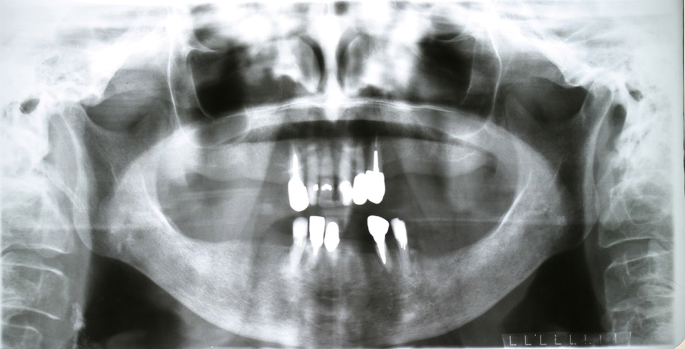
Do you know Carotid calcifications in panoramic radiographs can cause stroke or ischemic heart diseases?


A long-term follow-up study shows that  Carotid calcifications in panoramic radio-graphs are associated with future stroke or ischemic heart diseases in 60–96-year-old individuals.

carotid calcification on the right side


figure1


In dental practice, panoramic radiography is a frequently performed radiographic diagnostic method that can also be utilized to identify carotid artery calcifications when the area of the carotid artery bifurcates is visible.  Calcifications in the area of the carotid bifurcation are usually localized posterior and inferior to the mandibular angle adjacent to the space between the third or fourth cervical vertebrae (C3 and C4).

Data suggest that calcification identified in panoramic radiographs can be identified in 3–15% of the adult population.These signs of carotid calcifications are more frequently found in panoramic dental radiographs from older individuals .